
Retail inflation dipped to an over six-year low of 2.82 per cent in May due to subdued food prices, remaining below the RBI's median target of 4 per cent for the fourth consecutive month, according to government data released on Thursday. Consumer Price Index (CPI)-based retail inflation was 3.16 per cent in April and 4.8 per cent in May 2024.

Wholesale price inflation dropped to 0.85 per cent in April as prices of food articles, manufactured products, and fuel eased, government data showed on Wednesday. WPI-based inflation was 2.05 per cent in March. It was 1.19 per cent in April last year.

The Centre has taken several measures such as creating a buffer stock of 40,000 tonnes and sale of imported pulses at cheaper rates to give relief to the common man.

Retail inflation eased to a nearly six-year low of 3.16 per cent in April mainly due to subdued prices of vegetables, fruits, pulses, and other protein-rich items, creating enough room for the Reserve Bank to go for another round of rate cut in the June monetary policy review. The Consumer Price Index (CPI) based inflation was 3.34 per cent in March and 4.83 per cent in April 2024. It was 3.15 per cent in July 2019.
NDDB had helped dairy farmers direct their own development, placing control of the resources they created in their own hands.
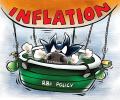
The Reserve Bank of India (RBI) has projected retail inflation at 4.2 percent for the next financial year beginning April while retaining the forecast for 2024-25 at 4.8 percent. The central bank attributed the expected easing of inflation to good kharif production, winter-easing in vegetable prices and favorable rabi crop prospects. However, the RBI also noted that continued uncertainty in global financial markets coupled with volatility in energy prices and adverse weather events presents upside risks to the inflation trajectory.

Stunning landscapes, natural beauty, clean beaches, cultural wealth, mouth-watering food, shopping options, safety for solo travellers, warm hospitality, easy visas, and connectivity make Vietnam a must-visit destination, discovers Ramesh Menon.
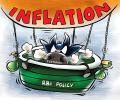
The Reserve Bank on Wednesday lowered the inflation projection for the current fiscal to 4 per cent from 4.2 per cent earlier, taking into account good agricultural output and falling crude prices.

According to government data, the prices have still not crossed the MSPs in some mandis.

To prevent hoarding and check price rise, the Centre on Friday imposed stock limits on all pulses, except moong, held by wholesalers, retailers, importers and millers till October. The stock limits are imposed with immediate effect. An order in this regard has been issued by the Union food and consumer affairs ministry. Retail prices of pulses rose by more than 20 per cent during the January-June period of this year, according to the ministry's data.
On a day when several mandis across the country are closed in protest against the recent Centre's decision to impose stringent stock-holding limit on pulses, the government clarified that limits have been defined as retail prices are still higher than last year though there is some moderation in the last few weeks. It said the same logic also holds true for edible oils, the import duties on which was slashed few days back and curbs lifted on import of refined oils. The decision on edible oil and pulses have caused massive resentment among the trading community as it came just ahead of the kharif sowing season, when prices were off their peaks due to multiple steps announced previously. Sources said trading activity in some of the major mandis dealing in pulses such as Sholapur, Amravati and Latur in Maharashtra, Indore and Dewas in Madhya Pradesh along with Kanpur in Uttar Pradesh was impacted as traders went on a flash strike in protest against the decision to impose stock limits.

Recent documents by NITI Aayog and periodic labour force surveys on employment show that the importance of agriculture is rising in the Indian economy.
Finance Minister Nirmala Sitharaman on Saturday announced six new schemes and increased the subsidised Kisan Credit Card (KCC) loan limit to Rs 7 lakh from Rs 5 lakh, targeting everything from unemployment to crop productivity enhancement across the country. Presenting her eighth budget speech in Parliament, Sitharaman positioned agriculture as "the first engine of growth" and unveiled the Prime Minister Dhan-Dhaanya Krishi Yojana, a flagship program targeting 100 agri-districts grappling with low productivity, moderate crop intensity, and below-average credit parameters.

Scenario is precarious for urad with almost half the crop damaged in major growing states, tur quota of 400,000 tonnes already exhausted.
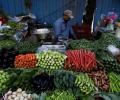
Continuing the downward trend, retail inflation fell to a five-month low of 4.31 per cent in January, mainly due to a decline in the prices of vegetables, eggs, and pulses. The Consumer Price Index-based retail inflation was 5.22 per cent in December and 5.1 per cent in January 2024. The previous low inflation was in August 2024 at 3.65 per cent.

These are the highlights of the Union Budget 2025-26 presented by Finance Minister Nirmala Sitharaman in Parliament on Saturday.

'In April, we saw a 10 per cent growth in our own volumes.'
India consumes around 24-25 million tonnes of pulses, but sowing trends show this year production is expected to be lower compared to last year.
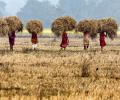
In a significant policy shift aimed at boosting agri-productivity and rural prosperity, Finance Minister Nirmala Sitharaman on Saturday announced six new agricultural schemes while increasing the subsidised Kisan Credit Card loan limit to Rs 5 lakh from the existing Rs 3 lakh, benefiting 7.7 crore farmers, fishermen, and dairy farmers.

A panel of Union ministers held a fourth round of talks with farmer leaders in Chandigarh on Sunday over their demands, including a legal guarantee of MSP, as thousands of protesting farmers camped at the Punjab-Haryana border.
Retail inflation slipped to seven-month low of 3.61 per cent in February mainly due to easing prices of vegetables, eggs, and other protein-rich items, creating space for the RBI to go for another cut in interest rate next month.

The fund allocated for pulses buffer is more than 40% of entire farm ministry's 2016-17 budget.

The impact of fiscal measures announced by the government to contain inflation will be seen in the next few months because of the base effect, reports Indivjal Dhasmana.
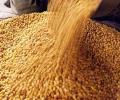
Distributing chana is easier than other varieties of pulses as it only requires cleaning and sorting and can be consumed whole; it was also abundantly available with Nafed.

In India, fast-moving consumer goods (FMCG) majors continue to hold sway, with incumbent brands cornering 65 per cent of the market share, shows a Bain & Company report. While identifying the continued preference of Indians for incumbent brands, the report says that the dominance of general trade in the country has allowed national brands to maintain their supremacy. The low penetration of e-commerce in the country has also helped large brands.

Billionaire Gautam Adani's group on Monday announced its exit from FMCG joint venture Adani Wilmar by selling its entire stake to the Singaporean partner and in the open market for an estimated over $2 billion in a first major deal since the US bribery indictment. In a statement, Adani Enterprises Ltd -- which held 43.94 per cent stake in Fortune brand cooking oil, wheat flour and other food product maker Adani Wilmar Ltd -- said it will sell 31.06 per cent stake to Wilmar International. About 13 per cent will be sold in the open market to meet minimum public shareholding requirements.

The Centre on Monday started selling tomatoes at a subsidised rate of Rs 65 per kg in the national capital to provide relief to the common man and check abnormal profits by intermediaries. Tomatoes are being sold at an average rate of Rs 90 per kg in the national capital.

Adani Group on Friday raised Rs 4,850 crore from the sale of 13.5 per cent of its stake in Fortune oil maker Adani Wilmar as part of a strategy to exit non-core activities to focus on main infrastructure business. The conglomerate, which last month announced its exit from Adani Wilmar by selling the bulk of its stake to a joint venture partner, had on Thursday announced sale of 17.54 crore shares (13.50 per cent equity) in the company on January 10 (to non-retail investors) and on January 13 (to retail investors) at a floor or minimum price of Rs 275 apiece.
Plans to enhance buffer stock to 500,000 tonnes; Gujarat exempts importers from stock limit
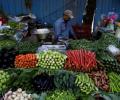
Retail inflation in August inched up to 3.65 per cent, though vegetables and pulses witnessed price rise in double digits, according to official data released on Thursday. The retail inflation based on the Consumer Price Index (CPI), however, remained below the Reserve Bank's median target of 4 per cent for the second month in a row. It was at a five-year low of 3.6 per cent in July.

At the PMO, policies are framed by factoring in analytical perspectives, implications, sustainability, and other dimensions.

The government on Wednesday increased the Minimum Support Price (MSP) for wheat by Rs 150 to Rs 2,425 per quintal for the 2025-26 marketing season, a move that comes ahead of key state elections. The Cabinet Committee on Economic Affairs (CCEA), chaired by Prime Minister Narendra Modi, approved price hikes for six rabi crops, with increases ranging from Rs 130 to Rs 300 per quintal for the 2025-26 marketing season beginning April 2025. "Like for kharif crops, there is a significant increase in the MSP for rabi crops," Information and Broadcasting Minister Ashwini Vaishnaw said in a media briefing after the Cabinet meeting.
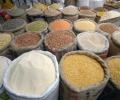
Procurement will be done through domestic purchases as well as imports.

Markets regulator Sebi joined hands by banning any fresh futures market position in chana, the only commodity among pulses where such trading was allowed

The total number of unique investors directly investing in the stock market has surged to 80 million for the first time, with the latest 10 million additions taking place in just eight months, according to data shared by the National Stock Exchange (NSE), the country's largest bourse. "The 80 million unique PAN (permanent account number) investors correspond approximately to around 50 million unique households in India amounting to around 17 per cent households directly investing in the Indian stock market via NSE's extensive nationwide network of trading members," said the exchange. In 2021, the number of domestic households were pegged at 300 million.

Retail inflation breached the Reserve Bank's upper tolerance level, soaring to a 14-month high of 6.21 per cent in October mainly on account of rising food prices. Inflation based on the consumer price index (CPI) was 5.49 per cent in September and 4.87 per cent in the year-ago month. Retail inflation trended below the RBI's upper tolerance band of 6 per cent since September last year.

The government will amend the six-and-a-half-decade old Essential Commodities Act to deregulate food items, including cereals, edible oil, oilseeds, pulses, onion and potato, Finance Minister Nirmala Sitharaman said on Friday. The amendment, besides deregulating production and sale of food products, will provide for no stock limit to be imposed on any produce.
Prices moved up sharply in recent months.

'My one recommendation would be to first quell the violence and then encourage dialogue and build the trust among the different communities.' 'This is not easy but necessary, for violence cannot be the way forward.'
